
Henry Martinez - A Tribute to “Si se puede”
By Felix Alvarado
February 5, 2015
His life reads like the song The Impossible Dream from Man of La Mancha. Henry R. Martinez Sr. has been fighting that unbeatable foe all his life. When he set a goal to accomplish something the naysayers were always there, “No se puede”. The dominant attitude was “No se puede.” He defeated that dominant attitude.
Henry R. Martinez Sr. has proud Mexican roots. He is the son of one of the original colonists of Cement City. His Father, “fue uno de los primeros que llego a Dallas.” He was helping connect the railroad from South Texas to North Texas. It was hard work but it offered a way to feed his family. Once here he found out the cement plant was hiring laborers. He applied for employment and was hired. Once he had employment he sent for his family. Cement City had the highest concentration of Mexicans in Dallas in the 1910 time period.

This was during a time that few children of Mexican immigrants went beyond the third grade. He attended Eagle Ford District 49 School more famous because one of its students was Bonnie Parker.
Henry graduated from Dallas Tech HS (Crozier Tech HS) school where most children of Mexican immigrants were sent. Children of Mexican immigrants were not permitted to attend Adamson HS or Sunset HS even though they were nearby. Leadership is a trait he learned from his father who made it a point that his three sons have a high school education.
Henry Martinez began his public service in the military. He is a Korean War veteran. He continued his service as a member and president of the Ledbetter Neighborhood Association. Henry is a consummate community organizer and activist. His activism can be seen by a Texas historical marker at the Campo Santo de Cemento Grande; a stone monument at the Wal-Mart parking lot at Cockrell Hill Road and I30 that pays tribute to those Mexicans that arrived in 1912; and a stone monument on Singleton Blvd at the entrance to the old Eagle Ford. Cementerios Mexicanos are a testament to the disparate treatment and social isolation of the Mexicano.
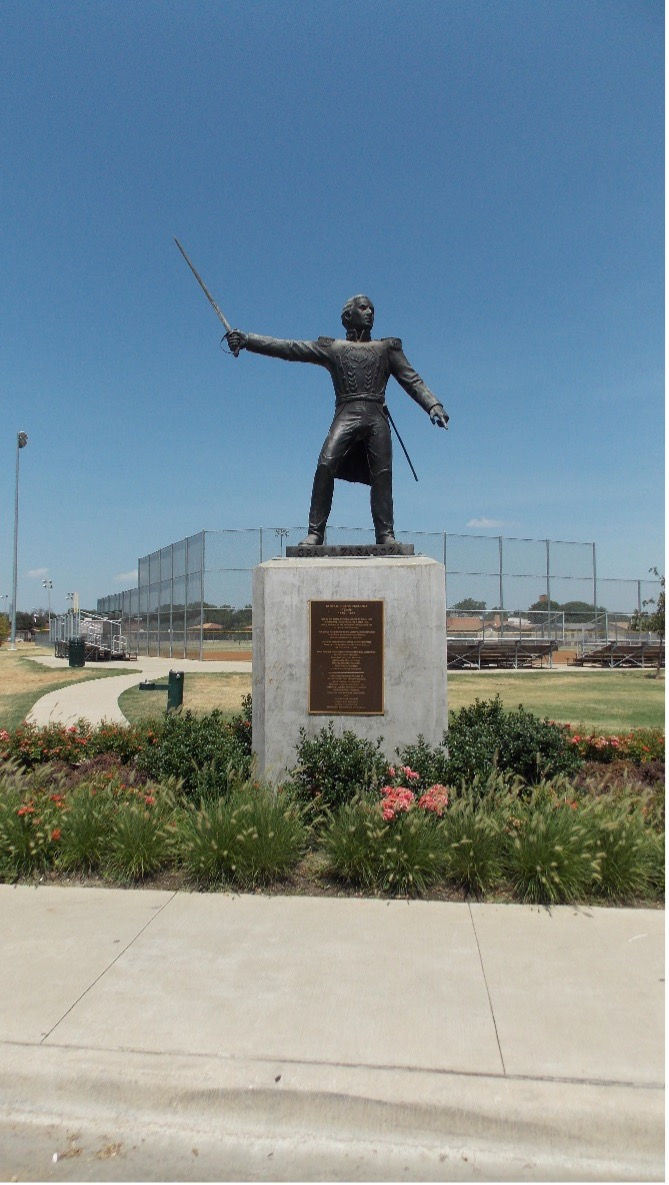
At Jaycee/Zaragoza Park is a statute that honors Tejano Ignacio Zaragoza, hero of the Battle of Puebla a donation from the country of Mexico to the Ledbetter Neighborhood Association.
Henry Martinez was successful in getting the DART to change the bus routes to go into the neighborhoods and pick up bus passengers. Prior to that bus passengers had to walk to the main street to be picked up. He also succeeded in having a school in West Dallas named after his brother Eladio R. Martinez. His brother was killed in action in WWII in the Philippines. Eladio R. Martinez Learning Center is named in honor of his brother. Eladio was the last person buried at the Campo Santo de Cemento Grande.

As President of Ledbetter Neighborhood Association Henry Martinez' biggest accomplishment was being part of the vanguard that succeeded in changing Dallas city council elections to single member districts. Single member districts increased the number of minorities elected to the city council.

I’d rather regret the things I have done than the things that I haven't. Lucille Ball
The City of Dallas recognized Henry R. Martinez’s achievements by naming a street in his honor. Henry R. Martinez Sr. has reached the unreachable star. The dream may have seemed hopeless but the world is better because of his accomplishments. We of Mexican-American heritage can be proud of this one man who dared to stand up when he was being told to stand down. It took a lot of courage to fight the unbeatable foe and reach the unreachable star. Henry R. Martinez Sr. can stand proud of his accomplishments.
Next issue we will learn the roots of the migration of Mexicans to North Texas.


Comments