
Quetzalcoatl: The Mexican Buddha
- Apr 22
- 4 min read
By Franco
From the Mediterranean came Jesus Christ, out of the Arab Middle-East Mohamed revealed the Koran, from the foot-hills of the Himalayas emerged the Buddha. What about Mexico, did Mexico produce any spiritual masters? The answer is yes, in the high valleys of tenth century Anahuac, the young prince Ce-Acatl Topiltzin Quetzalcoatl delivered a doctrine of peace and enlightenment to his people the Toltecs.
Chechen Itza – Temple of Kukulkan
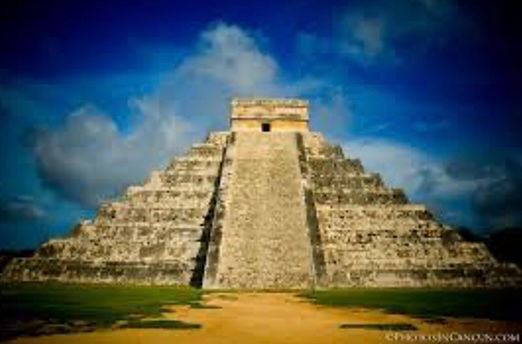
Many myths about Quetzalcoatl abound, obscuring the real historical spiritual master who was loved and revered by Native-Mexicans of pre-Columbian times. The Franciscans were at a loss when confronted with the fact that a great spiritual master such as Quetzalcoatl, the enlightened sage, had been produced within the Mexican culture. How could the Mexicans reach such heights of spirituality without knowledge of Christ? The Franciscans set out to explain the uncomfortable existence of Quetzalcoatl in a way that squared with their Christian view of the universe. Quetzalcoatl had to be the lost apostle Saint Thomas. There was no way that Mexicans could have discovered such a sublime spiritual doctrine on their own.
In some Mormon circles Quetzalcoatl was identified with Jesus Christ, who was believed to have preached in Anahuac after his resurrection. Recent myths have Quetzalcoatl being an alien who came from outer space, taught the barbarian Mexicans an enlightened doctrine, then built the pyramids before taking off back to mars.
Probably the most outlandish myth related to Quetzalcoatl is that the Aztecs believed Hernan Cortez was the returning Quetzalcoatl, and awed by Quetzalcoatl they were helpless in resisting the tiny army of invaders. This lie was purely a fabrication invented by Cortez and perpetuated by the Spanish to hide their genocidal history in Mexico. The truth is that no Native-Mexican document or tradition ever mentions the return of Quetzalcoatl, it is only to be found in the Spanish fabrications. the Aztec polity was aware of the existence of Europeans many years before Cortez ever set foot in Mexico. Aztec observers had kept careful watch of Mexican coasts and followed the activities of the Spanish in the Caribbean, Spaniards had already landed in Yucatan and had been defeated by the Maya. European traders had already sailed the Mexican coast and spread epidemics. When Cortez arrived, the Native-Mexican population was recovering from a recent epidemic. When Cortez finally confronted the Aztecs, over four hundred of his men were killed, many of them were sick with small-pox, their corpses spread the epidemic in Tenochtitlan.
When Cortez regrouped, and besieged Tenochtitlan, he was accompanied by over one hundred thousand Native-Allies, followed by a replenished Spanish army in the rear. Meanwhile Tenochtitlan was being ravaged by the small-pox epidemic. Almost all of the Aztec high-command was dead, the epidemic killed over 25% of the Aztec population. Only a few hundred elite Jaguar-Eagle warriors remained fit enough to defend the city. They were captained by the Aztec Hector, the last Mexican prince: Cuauhtémoc. There were so many victims of the epidemic that it was impossible to bury them, whole families died in households and their houses were demolished to serve as tombs. As the Spanish and their hordes of Native-Allies broke into Tenochtitlan, they found a city in ruins, they could hardly walk over the corpses of epidemic victims. The elite Jaguar-Eagle warriors and prince Cuauhtémoc fought bravely, killing a multitude of Spaniards and their allies, but it was futile, Tenochtitlan was already dead, killed by the small-pox.
Modern scholarship about Quetzalcoatl provides an interesting view of the Toltec avatar. In many ways he was similar to a Tibetan Lama. Quetzalcoatl underwent seven years of rigorous ritual training, he lived as an ascetic in the mountain caves of Anahuac and achieved enlightenment. This Mexican holy-man established the path of enlightenment in the Toltec people, and subsequently in the polities which were the descendents of the Toltecs, including the Aztecs. Under his enlightened rule the Toltec polity of Tollan became a center of learning, arts, and spiritual practice. The prince Ce-Acatl forbade human sacrifice and his city prospered and became the utopian model for future city-states in Mexico. Like the Buddha Shakyamuni, Quetzalcoatl's antagonists were evil sorcerers and demons, who wanted to plunge the people into delusional ways of living, and prevent them from awakening. As the prince Ce-Acatl Topiltzin's death was imminent, he gathered his closest disciples and travelled to the east coast of Mexico which was symbolic of rebirth. There his disciples cremated Quetzalcoatl's body, from Quetzalcoatl's burning body, brilliant and beautiful colored lights emerged. He had achieved the rainbow body similar to Tibetan Lamas of high spiritual achievement.
Not unlike like the Communist Chinese who exterminated over one million Tibetans and the Tibetan culture, demolishing Tibetan monasteries and temples, similarly the invading Europeans would destroy the Native-Mexican culture and traditions, the doctrine of enlightenment taught by Quetzalcoatl would be lost under the genocidal program waged against Native-Mexicans. Quetzalcoatl's doctrine of enlightenment faded into oblivion when there were no more Tlamacatzintli (enlightened ones) left after the genocide.


Comments